Build Real Solutions. Defend Your Code. Launch Your Ideas.
HackOrbit unites student innovators for an intensive, practical challenge focusing on functional software systems, real technical depth, and live code defense.
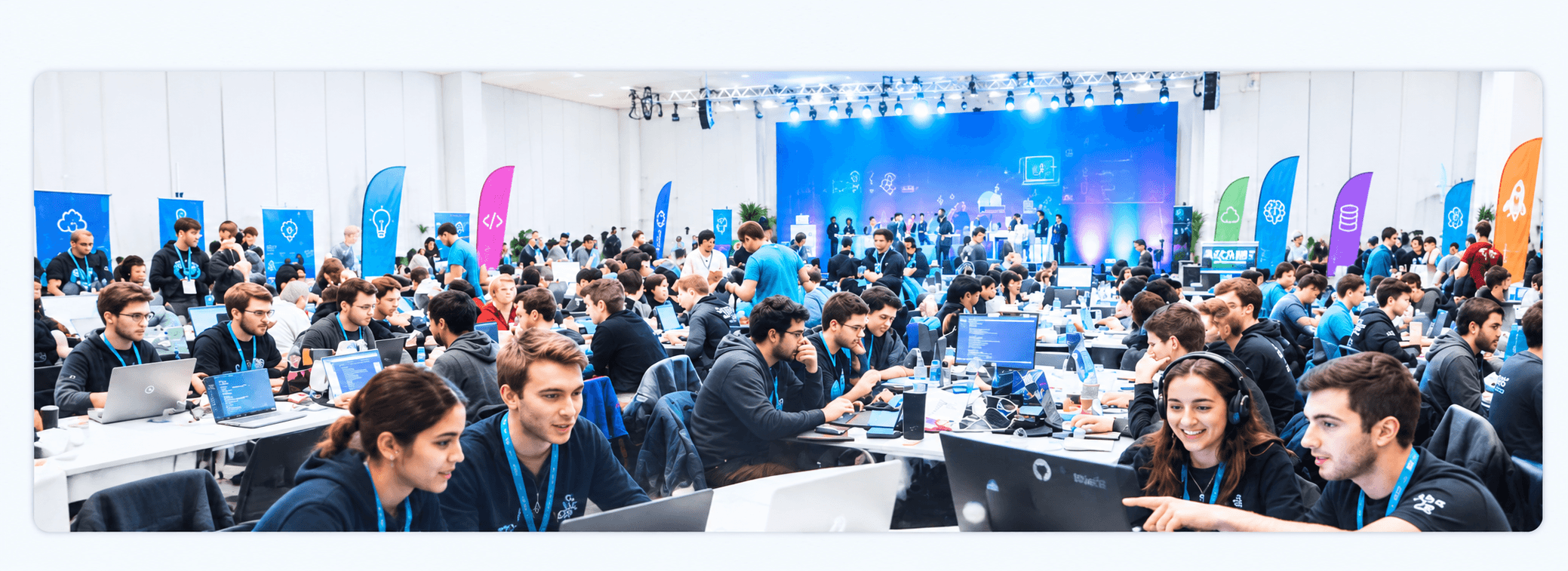
Live Architectural Inspection
Every project undergoes live git commit validation and stage defense before academic and industry adjudicators.
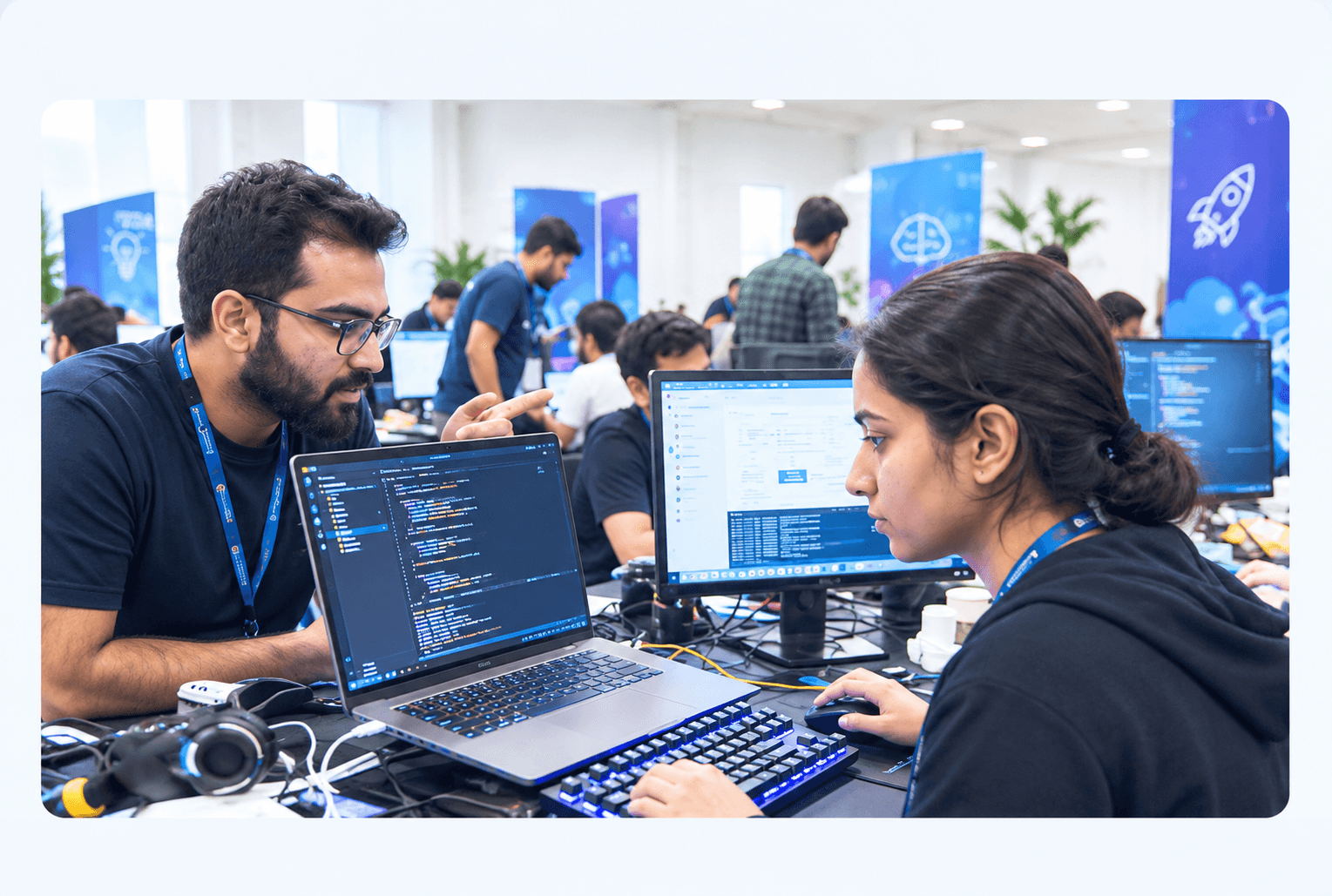
Zero Boilerplate
Focusing purely on end-to-end working prototypes with tangible civic and computational utility.
About & Hackathon Format
HackOrbit moves beyond theoretical demonstrations to prioritize working software, real-world utility, and complete technical understanding.
Stage 1: Solution Development
Teams select a theme, conceptualize their solution, and build functional software during the ~1 week window prior to event day. Push code regularly to verify steady progression.
Stage 2: Project Showcase & Verification
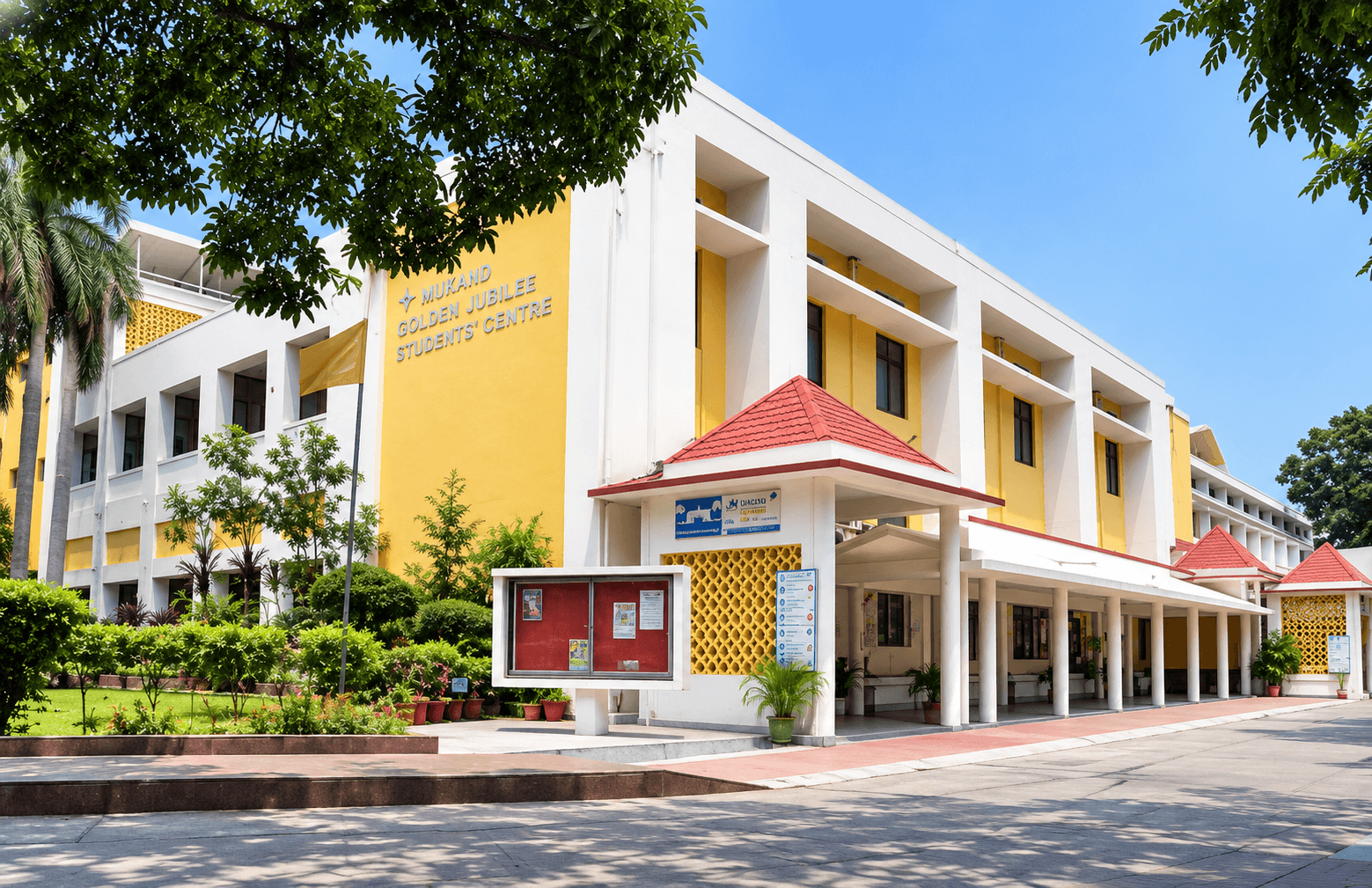
On the offline event day at the College Conference Hall, teams set up live stations for dynamic product demonstrations, architecture walkthroughs, and code-level inspection by technical evaluators.
Stage 3: Final Defense & Evaluation
Top shortlisted teams take the main stage to pitch and defend their engineering choices before the grand jury panel, responding to real-time stress testing and design critique.
Competition Tracks & Innovation Domains
Select one of four primary technical tracks to architect your application, and align it with our targeted innovation domains.
Software & Web Systems
Full-stack web applications, multi-tenant SaaS platforms, high-performance developer tools, resilient APIs, and database-driven automated workflows.
AI, ML & Data Engineering
Generative AI, Retrieval-Augmented Generation (RAG) architectures, specialized NLP agents, computer vision, predictive telemetry models, and multi-agent frameworks.
Civic Tech & Social Good
Pragmatic systems targeting public healthcare access, civic grievance administration, rural micro-economies, quality localized education, and municipal public infrastructure.
Open & Applied Research
Novel algorithm implementations, developer benchmarking utilities, applied cryptography, zero-knowledge proofs, decentralized protocols, and experimental mechanics.
8 Supported Problem Domains
AI & Intelligent Systems
Smart Governance
Civic Infrastructure
Climate & Sustainability
AgriTech & Resources
Cybersecurity & Protection
Campus Automation
Open Innovation
Hackathon Timeline & Schedule
From remote commit tracking through to the offline showdown at Mukand Lal National College Conference Hall.
Registered teams receive prompt access. Teams design schema, build application frontend/backend, configure databases, and maintain regular commits in their GitHub repo.
Teams arrive at the College Conference Hall, Mukand Lal National College. Desk allocation, local network check (BYOD mobile hotspots), power connectivity, and ID verification.
Welcome address by Tech Know Geek Club Incharges (Ms. Manisha, Ms. Himanshi, and Mr. Abhishek). Announcement of jury panel and evaluation criteria.
Judges visit all team stations for an 8-minute technical demonstration. Teams must show live endpoints, inspect active databases, and review git history to prove authorship.
Refreshments are served to all participants and mentors. Informal networking session while judges deliberate and compile shortlisted finalists for Round 2.
Top 8 shortlisted finalist teams take the main podium for a 5-minute technical pitch followed by a 4-minute cross-examination by senior faculty and guest industry judges.
Announcement of Grand Champions, 1st & 2nd Runners Up, and Track Winners. Distribution of awards, certificates of excellence, and closing reflections.
Judging & Evaluation Matrix
Evaluation is weighted heavily on execution, engineering rigor, and actual implementation rather than presentation pitch decks alone.
Judges reserve the right to review commits, package manifests, and require quick live modifications to ensure total authenticity.
Majority of scoring dedicated to architecture and operational prototypes.
Architecture quality, technology choice, API/database design, and in-depth grasp of implementation details.
Working core features, database integration, edge-case handling, and prototype reliability under live testing.
Practical relevance to chosen domains, originality of the approach, and measurable real-world utility.
Responsive layout, clear intuitive navigation, interface polish, accessible contrast, and logical user flow.
Technical clarity, live demonstration poise, and the team's ability to answer architectural questions without hesitation.
Awards & Cash Prizes
Celebrate standout software engineering and applied innovation with official honors and cash rewards from Mukand Lal National College.
2nd Prize
Awarded to the 1st runner-up for exceptional code quality, architecture, and technical execution.
Institutional merit citation for technical excellence
Grand Champion
Awarded to the top squad excelling in technical depth, deployment, and live code defense.
Prestigious Certificate of Excellence & Campus Laurels
3rd Prize
Awarded to the 2nd runner-up for the most viable, practical prototype addressing real-world challenges.
Verified innovation achievement recognition
Track-Specific Laurels
Top performing systems across each individual track receive dedicated Track Citations and special institutional endorsements.
Participation Certificates for All
Official certificates for all verified participating teams, technical feedback, and direct networking with institutional evaluators.
Vital Event Rules & Technical Guidelines
Please review these critical directives before finalizing your project architecture.
Software-Only Scope
HackOrbit 2026 is exclusively an applied software hackathon. Pure hardware-based projects (e.g., Arduino breadboards without robust cloud services, pure robotics kits) are excluded from this edition. Emulators and web-connected software frontends are permitted.
Code Verification & Ownership
Modern libraries, cloud APIs, and open-source packages are permitted, but uncredited boilerplate clones and direct YouTube tutorial copies will face immediate disqualification. Evaluators may review Git commit history, request line-by-line explanations, or ask for live modifications on stage.
Connectivity Notice (BYOD)
Standard electrical power strips and dedicated desk seating will be provided in the College Conference Hall. However, institutional Wi-Fi is unavailable in the hall area; participating teams must bring their own laptops and configure mobile hotspots or 4G/5G cellular data backups.
Professional Conduct & Ethics
Participants must conduct themselves with absolute professional integrity. Respectful engagement during peer demos, active and honest participation during jury Q&A sessions, and transparent disclosure of all third-party dependencies are non-negotiable requirements.
HackOrbit 2026 Registration
Authenticate to submit and manage your squad registration, track problem statement, and code defense slot.
Proud to be supported by Gen.xyz.
Gen.xyz joins HackOrbit as a technical sponsor, backing the student developer community with a strong commitment to innovation, digital infrastructure, and modern product thinking.